Beyond firewalls and cybercrime, data centers face a looming threat pressing against their roofs, walls, and foundations.

Data centers empower the digital world from high-capacity computing and cloud storage to artificial intelligence. At any time, natural forces can disrupt data center operations. This blog exposes nature-related threats to data centers and introduces a design approach that strengthens a data center’s defense.
Architects and owners prioritize data center protection. As new data center construction escalates, they invest enormous resources to fortify these mission-critical facilities against security breaches.
Unfortunately, most fail to mount an end-to-end defense against the catastrophic threat that nature—especially moisture—poses. Instead, they follow the same approach used in standard commercial construction and unwittingly expose the new data center to the same fate.
Moisture intrusion impacts 85% of commercial buildings. Most suffer costly water damage without experiencing an active leak. EPA Commercial Building Assessment Survey and Evaluation.
Water can trigger sudden failures in the critical infrastructure when extreme weather conditions like high winds and flooding hit. Meanwhile, everyday weather can cause compounding damage and costly downtime by silently seeping into foundations and collecting in roofing systems and wall cavities.
Even small amounts of moisture can degrade the infrastructure and eventually disrupt operations while also spreading mold and compromising indoor environmental conditions.
Water intrusion:
- Causes material degradation more than any other factor inside buildings (U.S. DOE).
- Triggers 70-80% of insurance claims according to Construction Industry Institute / Zurich Insurance – Risk Analysis of Building Failures.
Consequently, moisture often bypasses the defenses constructed to shield the building. About 90% of moisture damage originates in the building envelope. (DOE)
Data centers face an even greater risk than standard commercial buildings due to their high volume of sensitive computing equipment and strict need for climate-controlled environments.
Failing to protectively protect data centers from these pervasive threats exposes them to potential:
- System outages: Water intrusion can cause power outages and operational failure.
- Hidden damage: Minor moisture entry often leads to mold, corrosion, and electrical short circuits.
- Roof deterioration and water intrusion: Extreme weather can damage the roof and critical tie-ins, leading to mass water damage. Edge metal fails expose membranes and walls to damage, putting occupants and computing resources at risk.
In data centers, every second of availability matters. Even swift responses often come too late, as water migrates quickly across the infrastructure and jeopardizes the controlled environment and sensitive equipment.
When computing systems fail, data center owners face significant costs to restore the facility without disrupting operations—or worse, recover from system losses.
Downtime can cost up to $9,0000 per minute or $540,000 per hour for large organizations and $427 per minute for small-and-mid-sized ones4 HEUNETS, “The Hidden Costs of Data Center Downtime: What You Need to Know”, March 2025.
Charting a New Course for Proactive Protection
Building envelope systems are designed to protect commercial buildings and their contents from external threats such as rain, melting snow, wind, and rising water tables. Architects carefully design each system and specify each component for the building’s specific climate risks and performance demands.
So why does moisture eventually find a way into 90% of commercial buildings—and why do 90% of intrusions originate in the building envelope?
Often, building envelope systems prove insufficient because their components are not manufactured to fit together seamlessly. Theoretically, builders should be able to use designated components from various manufacturers for each system and expect reliable results.
However, reality often differs. Standalone components may follow the same specifications, but unless they are manufactured and tested as an integrated system, they can leave gaps in the building envelope through adhesion loss or chemical incompatibility at critical tie-ins. Water infiltrates through cracks, joint failures, and transition points such as foundation-to-wall and roof-to-wall connections.

- Within the walls and under the roof: Condensation and humidity create micro-breaches at junctions, gutters, and penetrations.
- Critical tie-ins at below grade-to-wall and roof-to-wall junctures are not seamless, leaving gaps for moisture to enter.
- Below grade: Rising water tables and flash floods increase hydrostatic pressure, pushing water against the foundation and into cracks and imperfections.
- Above grade: Storms damage exterior surfaces, allowing water to penetrate and accumulate in walls and ceilings.
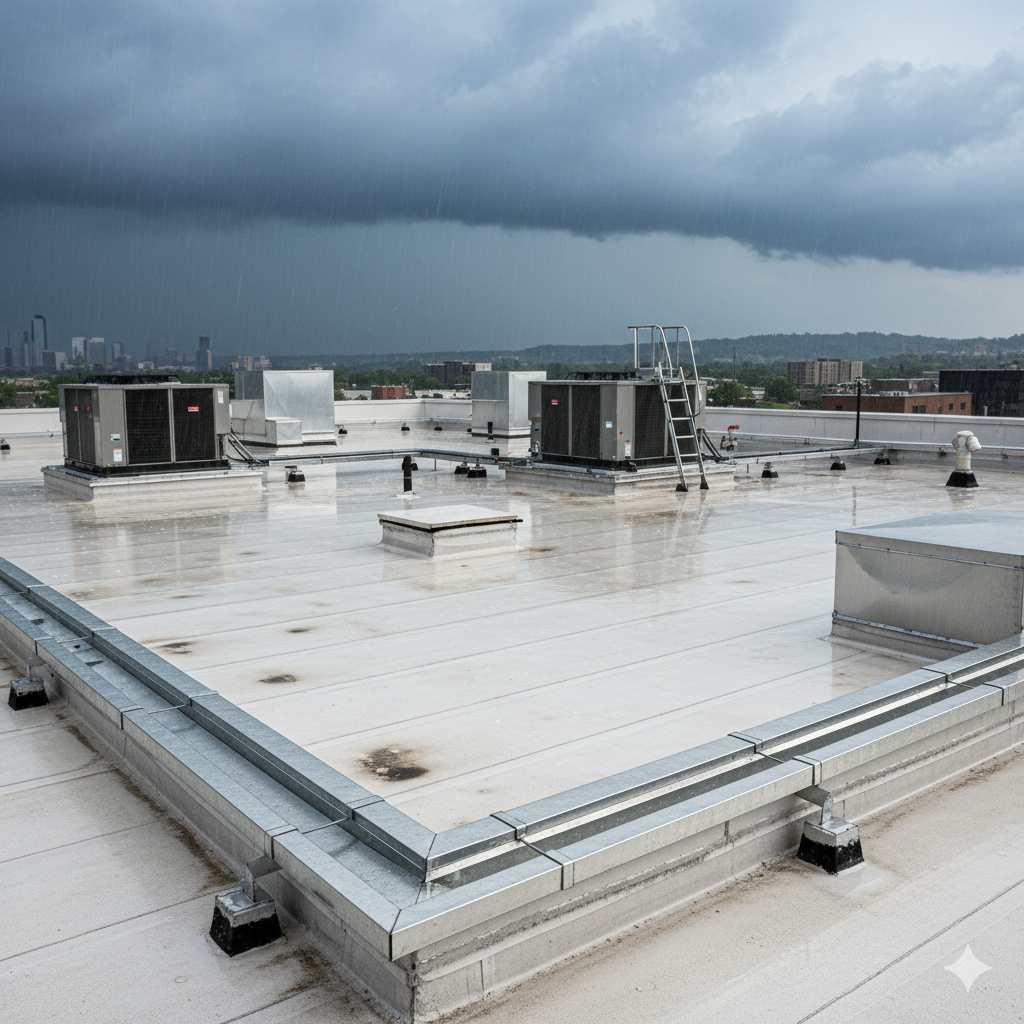
Storms, wind, and UV exposure damage roofs and accelerate building envelope failures.
- 80% of global wind-related losses are tied to compromised roofing systems.
- 59% of those losses result from perimeter failures, such as edge metal failures.
Unsealed transitions, incompatible products, and fragmented warranties increase exposure.
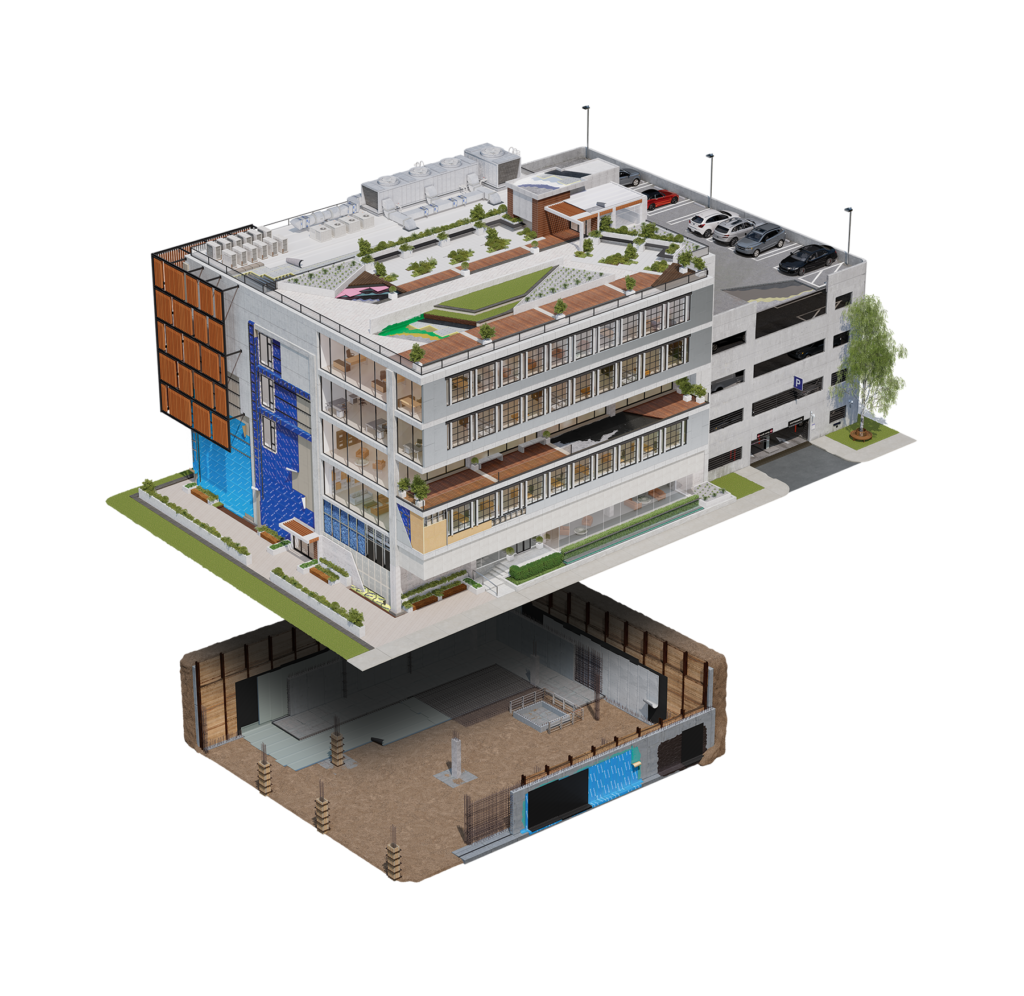
An integrated building envelope can deliver seamless protection against moisture intrusion—from below-grade through above-grade walls and edge metal in roofing systems.
Integrated envelopes are designed to fit together and create a tight seal that effectively blocks water intrusion, wind, and other outdoor elements. They minimize vulnerabilities at critical tie-ins, where failures most often occur.
Carlisle Building Envelope Systems deliver full protection through multilayered, integrated products engineered to work together. Unlike piecemeal systems from multiple vendors, Carlisle’s Building Envelope Systems focus on critical tie success, including:
- Covering every surface from below-grade to the rooftop.
- Ensuring continuity of performance and product compatibility across all components.
- Providing long-term parts and labor warranties.
- Creating an end-to-end line of defense against water intrusion, extending from below-grade through above-grade walls and edge metal in roofing systems.
The solution protects against wind uplift by securing the building envelope through the perimeter edge. Seamless integration and continuous protection eliminate weak points where leaks often occur, such as across all transitions, including:
- Roof-to-wall transitions
- Air and vapor barriers
- Roof membrane to WRBs
- Window or door perimeters
- Material transitions
- Edge details, corners, and transitions.
Backed by decades of innovation and proven performance, Carlisle offers tailored solutions that protect mission-critical facilities and provide peace of mind for building owners, architects, and contractors.
No single set of products can protect all data centers. Architects must evaluate numerous components for each layer in the building envelope. A robust design guide helps ensure a comprehensive design that addresses every decision.
“Early identification of performance drivers ensures system continuity, redundancy, and resilience. This design guide outlines key considerations to support high-performance designs.” Carlisle Design Guide.
When data center project teams partner with a manufacturer that provides personalized specification support and onsite consultation, they ensure each layer works as designed and help data centers quality for a long-term warranty.
Carlisle works closely with architects, owners, and contractors to identify solutions for each individual data center, choosing among compliant, award-winning products proven to deliver on the design intent. Servies continue through design, construction, and post-construction. They include:
- Onsite roof measurements, install training/guidance, and quoting.
- Design review to verify building envelope suitability, critical tie-ins, and warranty eligibility.
- Contractor training and on-site verification during the construction process.
- Annual follow-up with leak detection and moisture scans.
Built with the
Brands You Trust